The Great Gatsby
I doubt I can offer a fresh, piercing insight about The Great Gatsby, so I am not going to try. Instead, here are five quotes that really gripped me when I read the book, with some musings and context around them.
My Favourite
I am going to start with my favourite. Everybody has their favourite Great Gatsby quote. Usually, it is the closing lines about the green light & boats against the current, or the line about girls being little fools. I like those too, and you will find them below. But for me, the favourite passage is the following, and it is not particularly close:
"He smiled understandingly — much more than understandingly. It was one of those rare smiles with a quality of eternal reassurance in it, that you may come across four or five times in life. It faced — or seemed to face — the whole external world for an instant, and then concentrated on you with an irresistible prejudice in your favor. It understood you just so far as you wanted to be understood, believed in you as you would like to believe in yourself, and assured you that it had precisely the impression of you that, at your best, you hoped to convey."
I think this is the best description of charisma ever penned. Or at least the best one I have come across. Just read it one more time!
I am not a Fitzgerald scholar, or enough of a literary critic, to say exactly why The Great Gatsby is called one of the greatest American novels ever written, if not the greatest. But the quality of the writing, the sheer lucidness of the prose, has to be part of it. Just as people listen to their favourite songs on repeat, I could read this passage. On repeat.
The Beautiful Little Fool
Anyone who does a little digging into F. Scott Fitzgerald’s personal life, quickly realizes how remarkably blurred the lines were between his own life and the lives of his protagonists. There is a wonderful Great Gatsby episode of The Book Club, hosted by Dominic Sandbrook of The Rest Is History podcast, and the delightful Tabitha Syrett, where they dig into these rich parallels. One memorable parallel was this quote.
“I hope she'll be a fool -- that's the best thing a girl can be in this world, a beautiful little fool.”
It is reported that when Frances “Scottie” Fitzgerald was born on October 26, 1921, F. Scott Fitzgerald recorded Zelda — his equally glamorous wife, still partly under anesthesia — saying, in a rambling way, “I hope it’s beautiful and a fool—a beautiful little fool.” That version appears in the transcription of Fitzgerald’s ledger and is repeated by major Fitzgerald scholars.
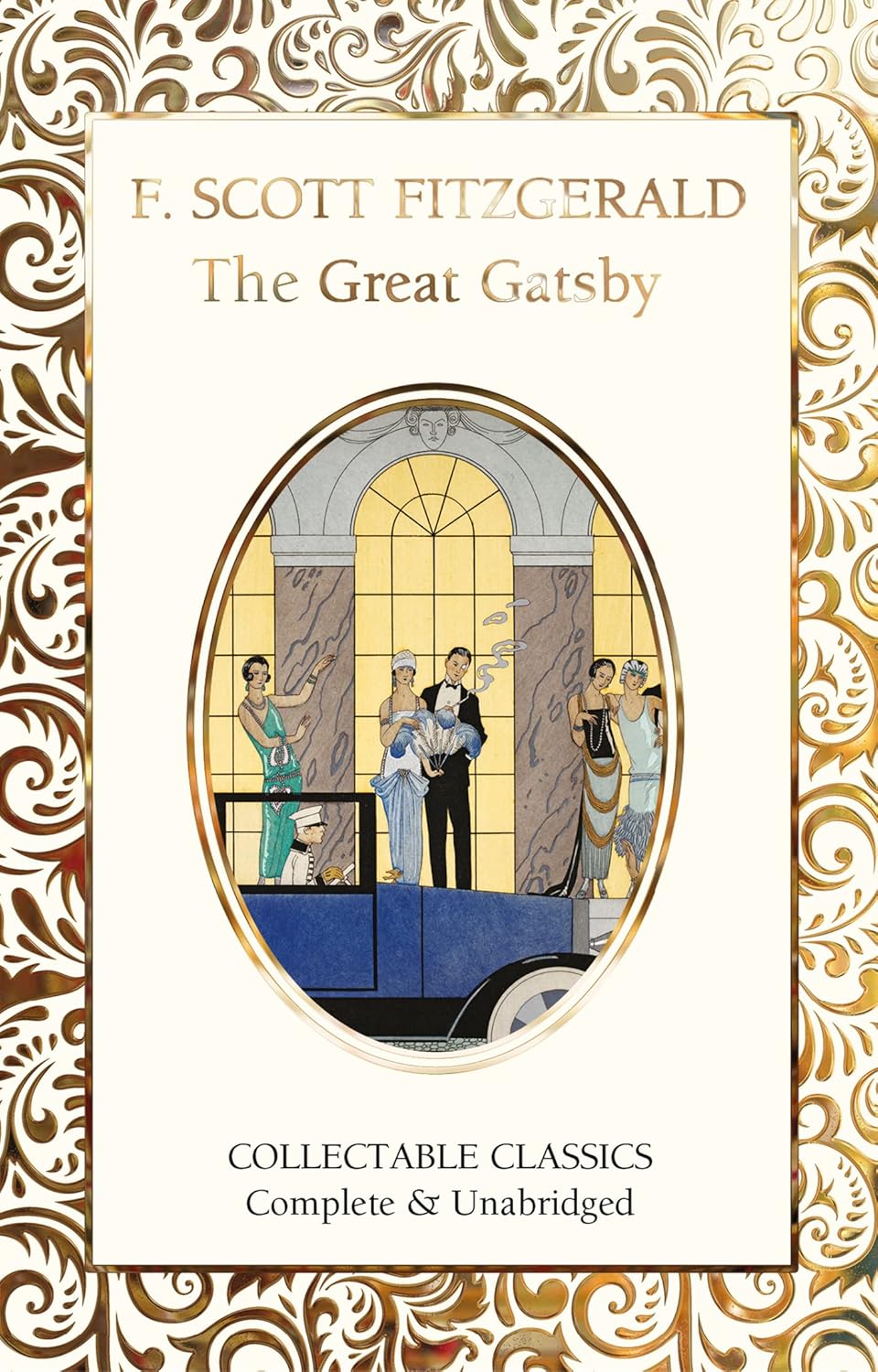
The Flame Tree Collectable Classics version was a delight
Nick Carraway Can’t Catch a Break
Nick Carraway, the narrator of the novel, is not morally pure. And I do not think the author wants us to think of him that way either. He is selective, vain, often passive, and probably not nearly as “honest” as he thinks he is. But I have sometimes felt that literary criticism of him can become a bit overzealous. I am perfectly fine with a narrator who is not fully self-aware, fully brave, and ethically spotless at every moment. I thought this quote captured him beautifully:
“Angry, and half in love with her, and tremendously sorry, I turned away.”
This comes at the end, when his relationship with Jordan is falling apart after the whole summer’s wreckage, and it catches him in a single stroke: still drawn to her, still judging her, and not innocent himself.
Dario Amodei and Sam Altman
It is not a stretch to say that Tom and Daisy Buchanan do not come across as particularly likeable characters in the novel. But theirs is a very particular sort of unlikeability. It is the unlikeability of powerful people moving recklessly through the world, hoping the fallout lands somewhere else.
“They were careless people, Tom and Daisy- they smashed up things and creatures and then retreated back into their money or their vast carelessness or whatever it was that kept them together, and let other people clean up the mess they had made.”
As I kept mulling over this quote, I could not help but think of Sam Altman of OpenAI and Dario Amodei of Anthropic. As Noah Smith recently noted, the two founders are often seen doing press rounds with some version of the message: “Our product will make you economically useless, and possibly kill you.”
Even in my most charitable readings of their public remarks, I struggle to believe that Sam and Dario fully mean everything they say. The more likely explanation is that they are trying to influence customers, investors, and regulators. In the process, they create genuine chaos in their wake in pursuit of business interests: mass anxiety, volatile markets, and livelihoods disrupted far too casually. And, like Tom and Daisy, they seem to assume that someone else will clean up the mess.
Fareed Zakaria & The American Dream
Some of the best book recommendations I get these days come from podcasts. Over the last few months, two new podcasts dedicated to reading and discussing books, albeit with slightly different goals and formats, have entered my orbit. One is The Book Club podcast I mentioned before. The other is Old School with Shilo Brooks, where Brooks speaks to people of general public renown about a book.
When Fareed Zakaria appeared on the podcast a few months ago, he chose The Great Gatsby. In many ways, it was only fitting. He remains one of the staunchest defenders of an America-mediated liberal international order centred on Enlightenment values. He is also acutely aware of where it falters, and of its many different failure modes.
As someone who has experienced and observed the American Dream, its promise, its power, and its elusiveness, it is no wonder that he chose the following as his favourite passage from the book, widely regarded as the novel’s most powerful:
“Gatsby believed in the green light, the orgastic future that year by year recedes before us. It eluded us then, but that's no matter--tomorrow we will run faster, stretch out our arms farther.... And one fine morning-- So we beat on, boats against the current, borne back ceaselessly into the past.”